

Curated by Circumstance


By Lee Basford
November 17, 2025
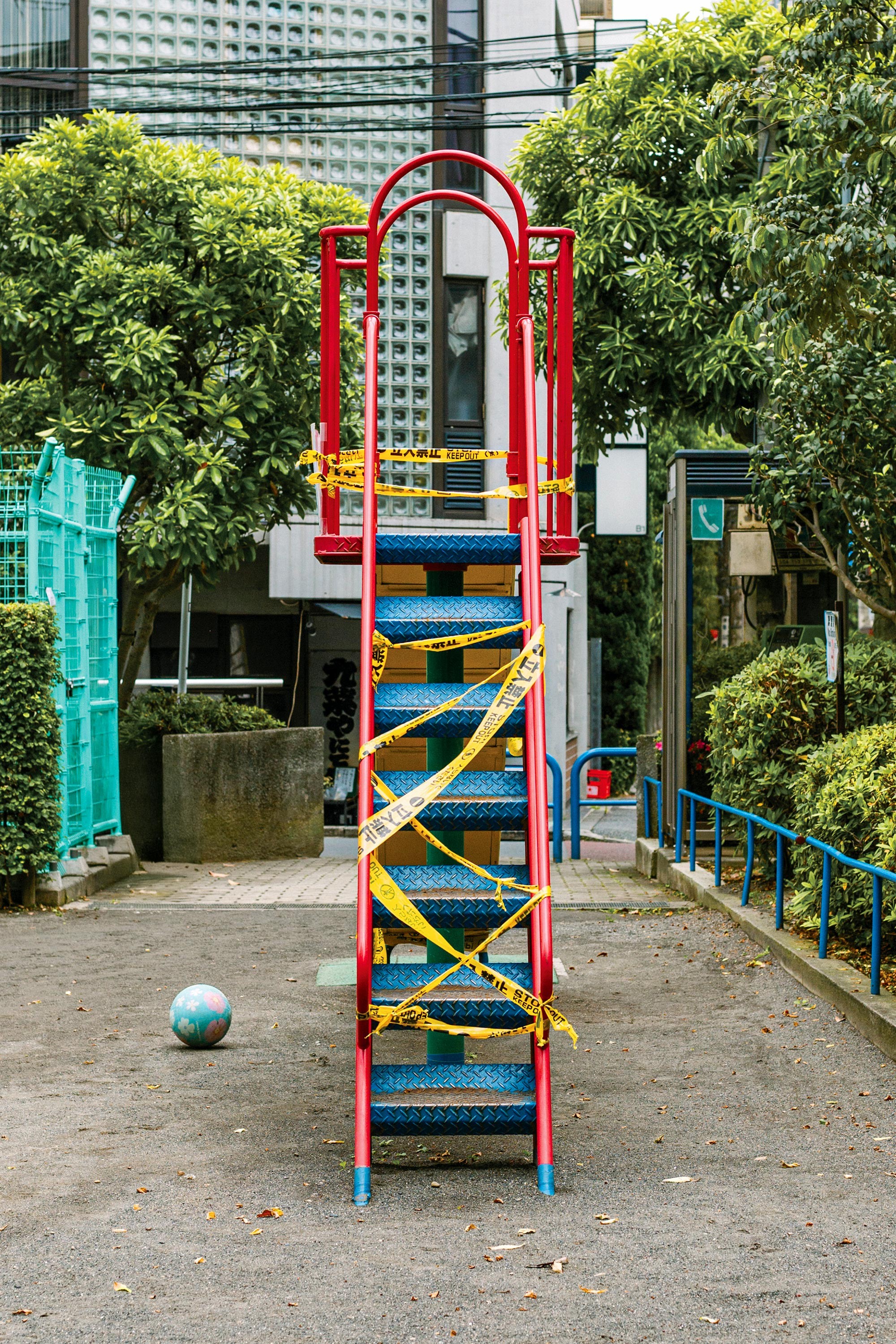
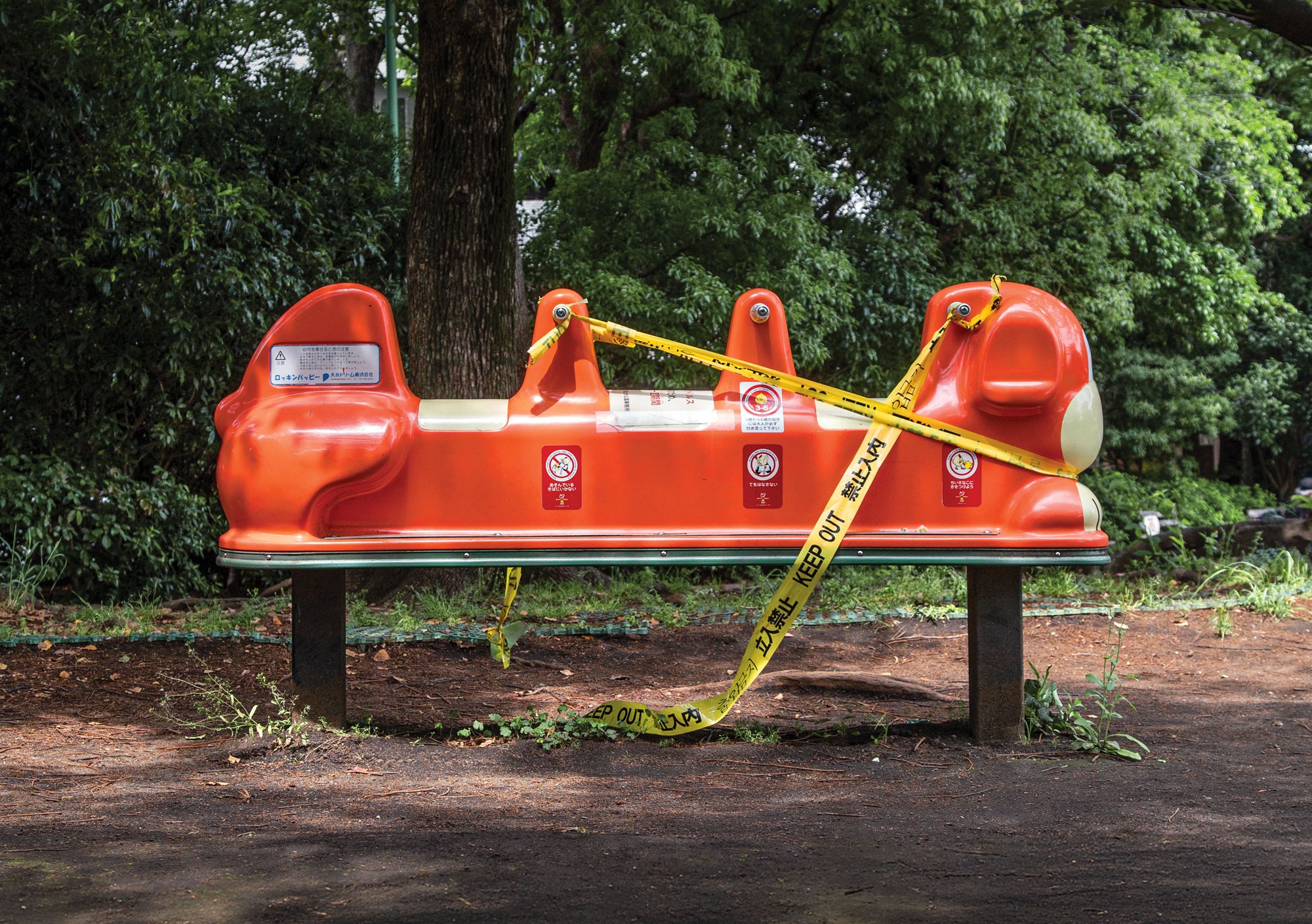
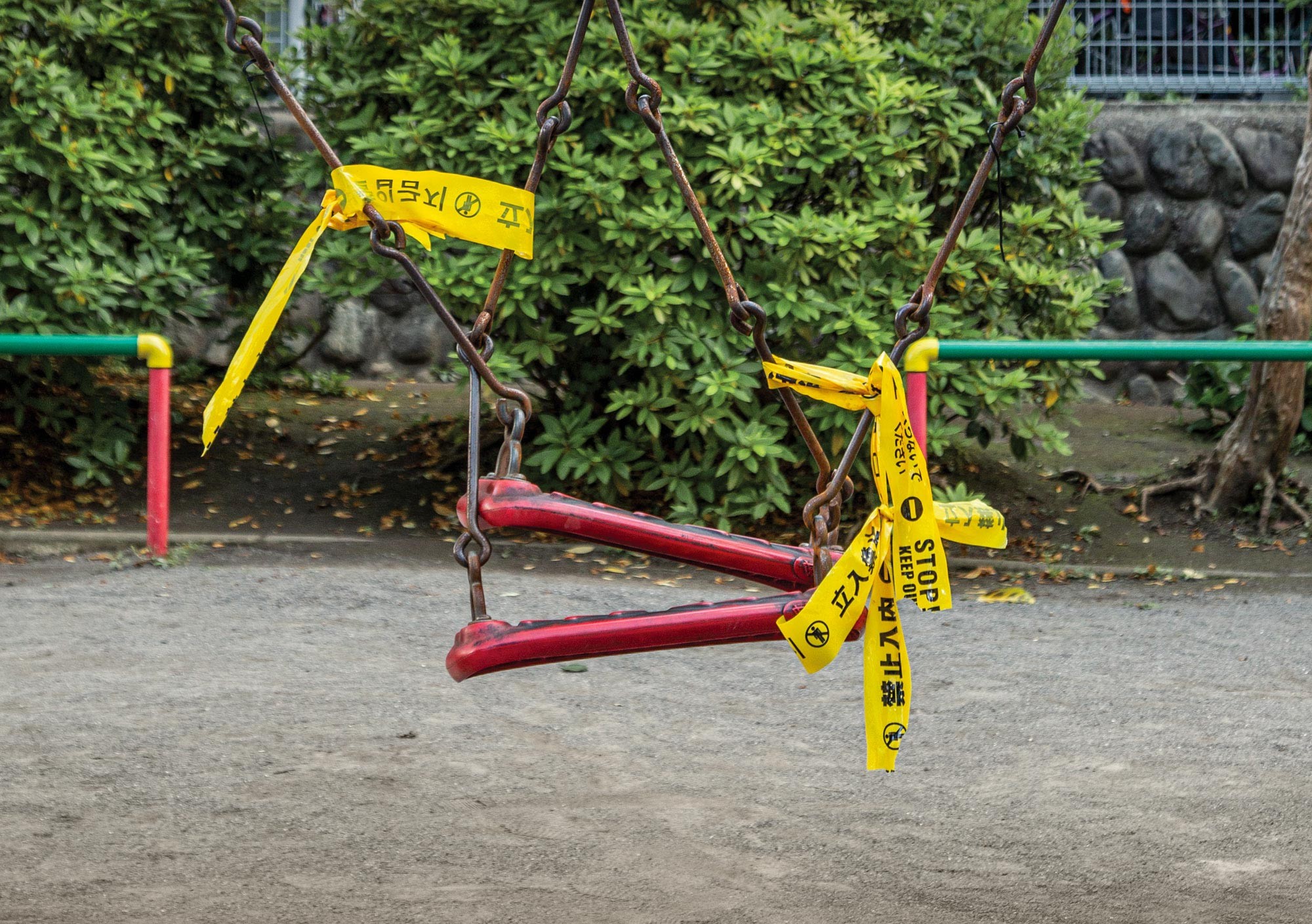
During the early months of the city’s voluntary lockdown, its parks and playgrounds were cordoned off: swings bound in yellow tape, slides wrapped like unfinished sculptures.
These small, unassuming spaces tucked between apartment blocks had always been full of motion. Children, bicycles, the steady rhythm of conversation were now still, and in that stillness, something had changed. The city had quietened itself, not by force but by Tokyo’s peculiar brand of collective discipline. Depending on the neighbourhood, these interruptions of play were treated differently: some left untouched, others torn down, only to be replaced by workers the next morning.

“These playgrounds, stripped of their function, became sculptures of pause. Their purpose of movement, play and noise had been removed, leaving behind pure structure”
At first, it was only about seeing how the city looked without its usual noise. Playgrounds quickly became the focus of that attention. They were suddenly, absurdly beautiful. A slide intersected by warning tape became something new. A set of swings, bound motionless, resembled a minimalist installation, an arrangement of form and colour. The tape and the signs became accidental marks in an unplanned exhibition where art had come to the city uninvited.

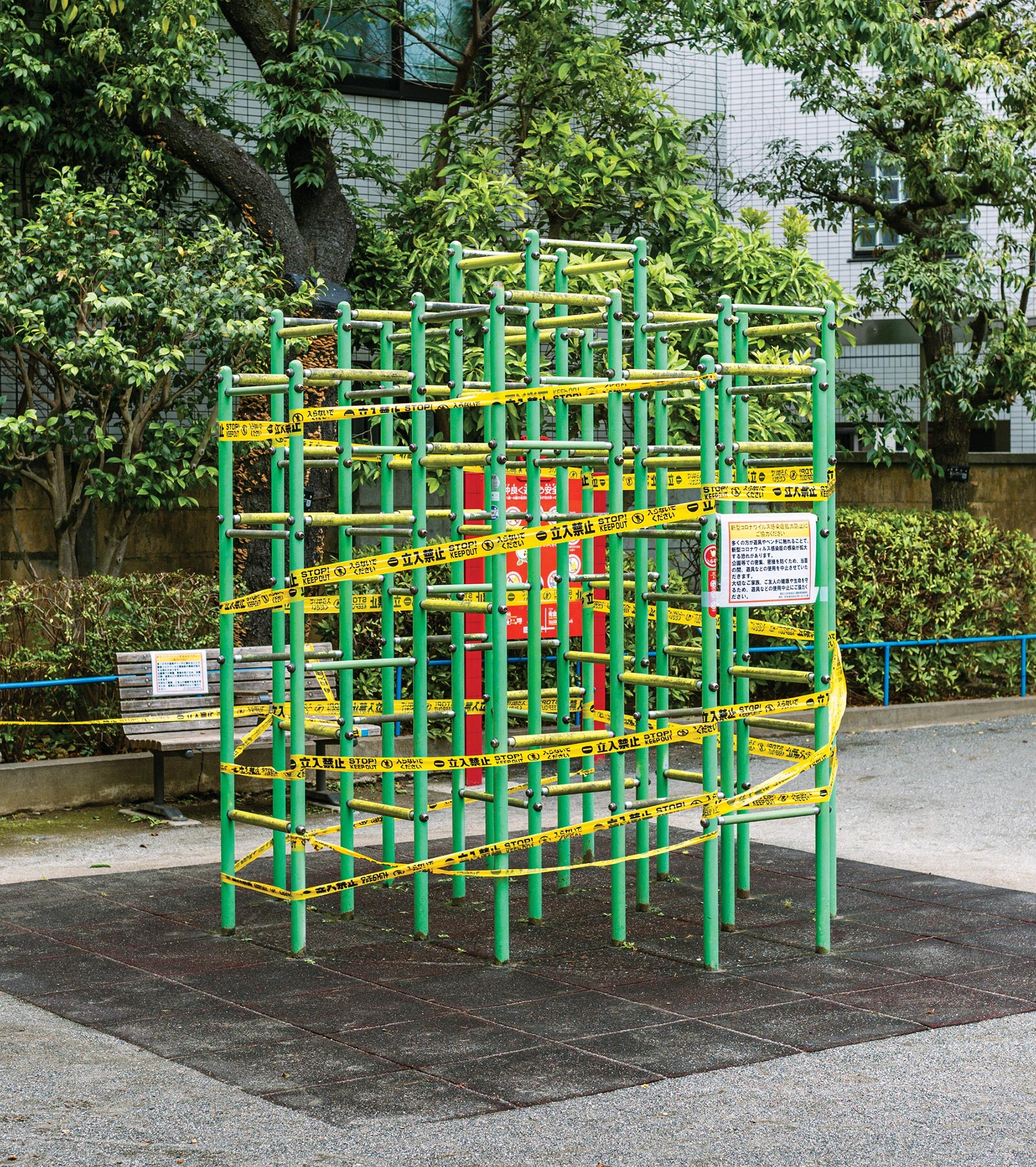
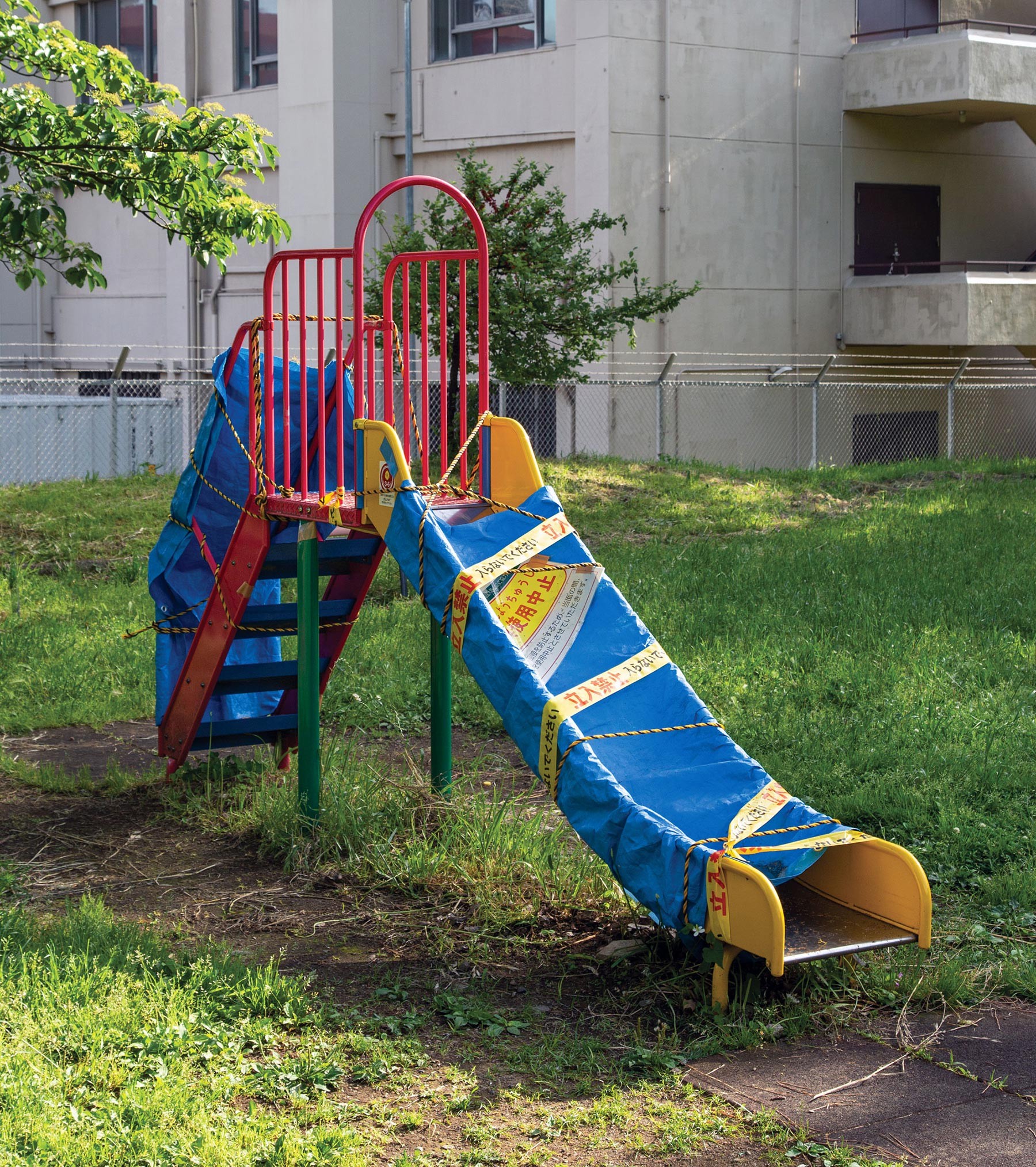
These playgrounds, stripped of their function, became sculptures of pause. Their purpose of movement, play and noise had been removed, leaving behind pure structure: wrapped in silence, recalling Christo and Jeanne-Claude’s temporary monuments. There was something of Masataka Nakano’s Tokyo Nobody in it also. Like his patient, impossible city, mine too was emptied, not by design but by intervention. Yet the effect was eerily similar. With its people gone, Tokyo seemed to breathe differently.

“There are moments in every city when familiarity shifts. You notice the way light falls across a surface you have passed a thousand times.”
There are moments in every city when familiarity shifts. You notice the way light falls across a surface you have passed a thousand times. You notice the absence of footsteps. The camera, in those moments, does not simply document; it translates, turning caution tape into line, emptiness into form. The images from those weeks are, in one sense, about the pandemic. But in another, they are about how restriction can reframe what we see. The tape does more than restrict; it defines and reframes, asking us to look again at what is already there. In that sense, the city became a kind of open-air gallery, curated by circumstance.

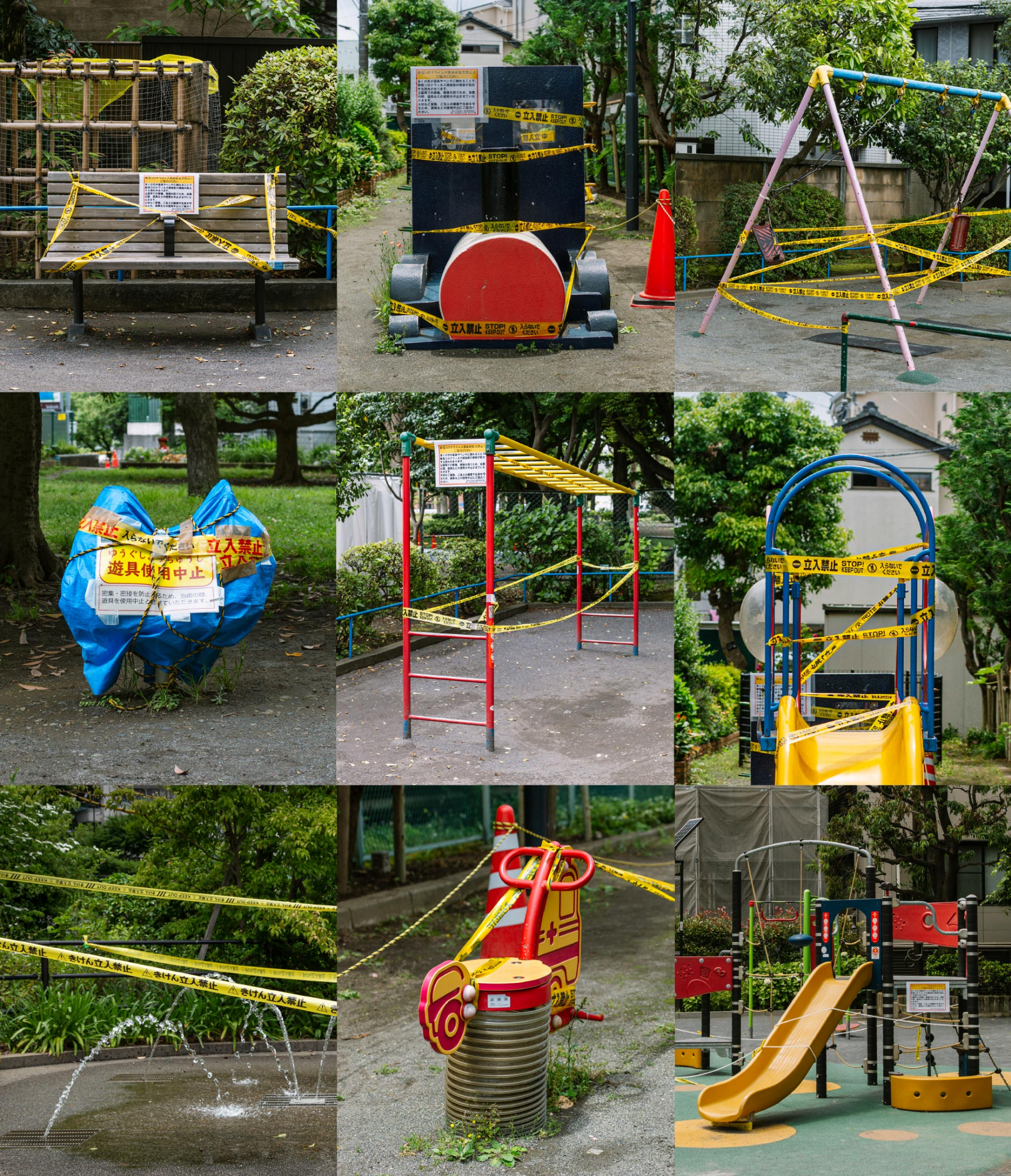
Now those same parks are full again. The tape is gone. The swings move. The children shout. The air carries the same rhythm it did before. But when I look at the photographs, I do not see restriction. I see composition, and think of how the camera can elevate the accidental. These were not monuments of art, but they carried a similar charge: ordinary objects, reconfigured by context, became symbols of time suspended. The playgrounds of Tokyo were never meant to be sculptures. And yet, for a short time, they were. Works of a quiet stillness, drawn across the city in yellow lines. Reminding us that art sometimes happens when life pauses long enough to notice.

1
Christo & Jeanne-Claude. (n.d.). Packages and wrapped objects.
2
Masataka Nakano, Tokyo Nobody (Little More, 2000).


Sign up to receive
the latest news.






Curated by Circumstance
By Lee Basford
November 17, 2025
During the early months of the city’s voluntary lockdown, its parks and playgrounds were cordoned off: swings bound in yellow tape, slides wrapped like unfinished sculptures.
These small, unassuming spaces tucked between apartment blocks had always been full of motion. Children, bicycles, the steady rhythm of conversation were now still, and in that stillness, something had changed. The city had quietened itself, not by force but by Tokyo’s peculiar brand of collective discipline. Depending on the neighbourhood, these interruptions of play were treated differently: some left untouched, others torn down, only to be replaced by workers the next morning.


“These playgrounds, stripped of their function, became sculptures of pause. Their purpose of movement, play and noise had been removed, leaving behind pure structure”
At first, it was only about seeing how the city looked without its usual noise. Playgrounds quickly became the focus of that attention. They were suddenly, absurdly beautiful. A slide intersected by warning tape became something new. A set of swings, bound motionless, resembled a minimalist installation, an arrangement of form and colour. The tape and the signs became accidental marks in an unplanned exhibition where art had come to the city uninvited.


These playgrounds, stripped of their function, became sculptures of pause. Their purpose of movement, play and noise had been removed, leaving behind pure structure: wrapped in silence, recalling Christo and Jeanne-Claude’s temporary monuments. There was something of Masataka Nakano’s Tokyo Nobody in it also. Like his patient, impossible city, mine too was emptied, not by design but by intervention. Yet the effect was eerily similar. With its people gone, Tokyo seemed to breathe differently.

“There are moments in every city when familiarity shifts. You notice the way light falls across a surface you have passed a thousand times.”
There are moments in every city when familiarity shifts. You notice the way light falls across a surface you have passed a thousand times. You notice the absence of footsteps. The camera, in those moments, does not simply document; it translates, turning caution tape into line, emptiness into form. The images from those weeks are, in one sense, about the pandemic. But in another, they are about how restriction can reframe what we see. The tape does more than restrict; it defines and reframes, asking us to look again at what is already there. In that sense, the city became a kind of open-air gallery, curated by circumstance.
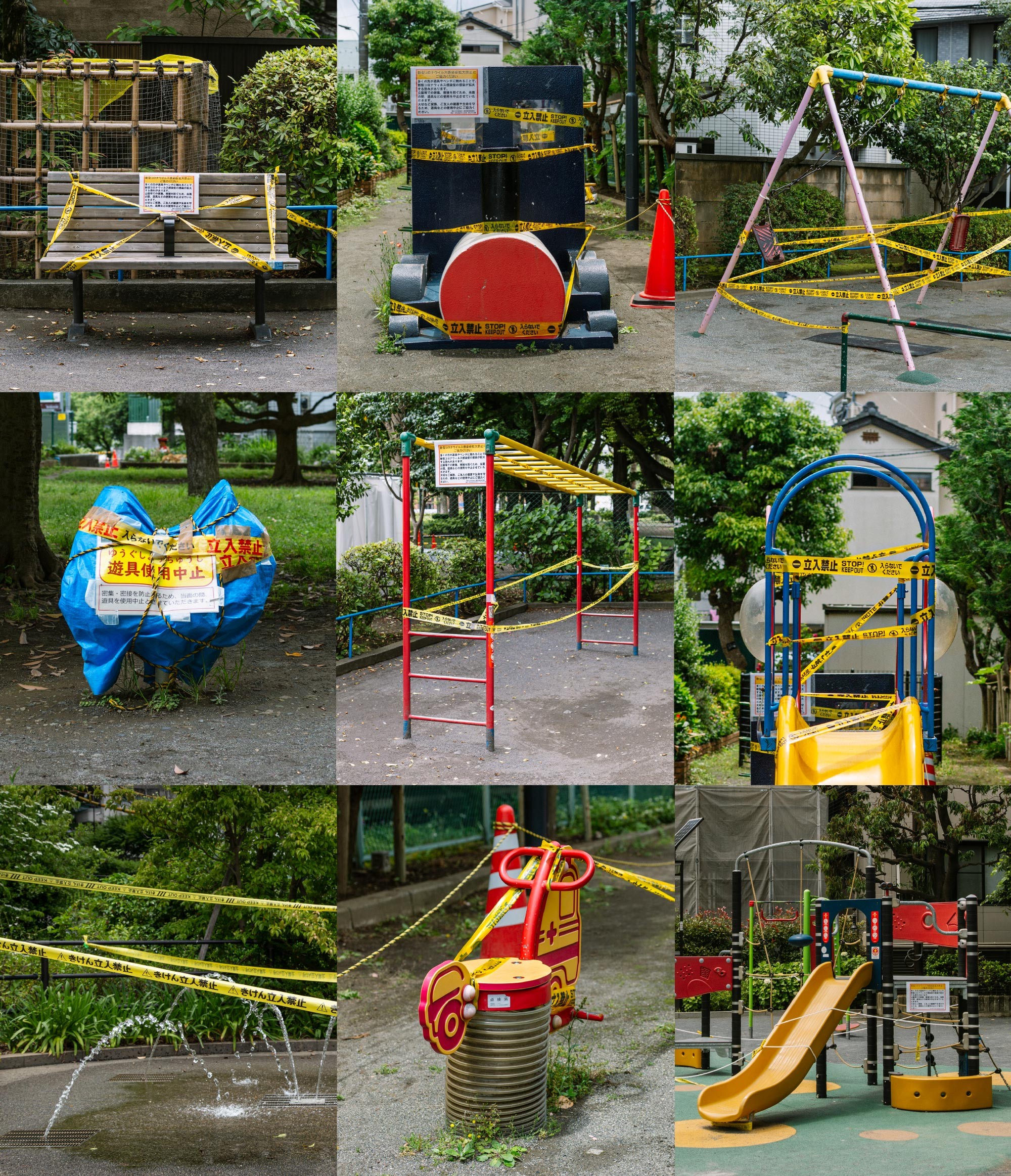
Now those same parks are full again. The tape is gone. The swings move. The children shout. The air carries the same rhythm it did before. But when I look at the photographs, I do not see restriction. I see composition, and think of how the camera can elevate the accidental. These were not monuments of art, but they carried a similar charge: ordinary objects, reconfigured by context, became symbols of time suspended. The playgrounds of Tokyo were never meant to be sculptures. And yet, for a short time, they were. Works of a quiet stillness, drawn across the city in yellow lines. Reminding us that art sometimes happens when life pauses long enough to notice.

1
Christo & Jeanne-Claude. (n.d.). Packages and wrapped objects. from https://christojeanneclaude.net/artworks/packages-and-wrapped-objects/
2
Masataka Nakano, Tokyo Nobody (Little More, 2000).

Sign up to
receive
the latest news.


