‘What is a brand?’
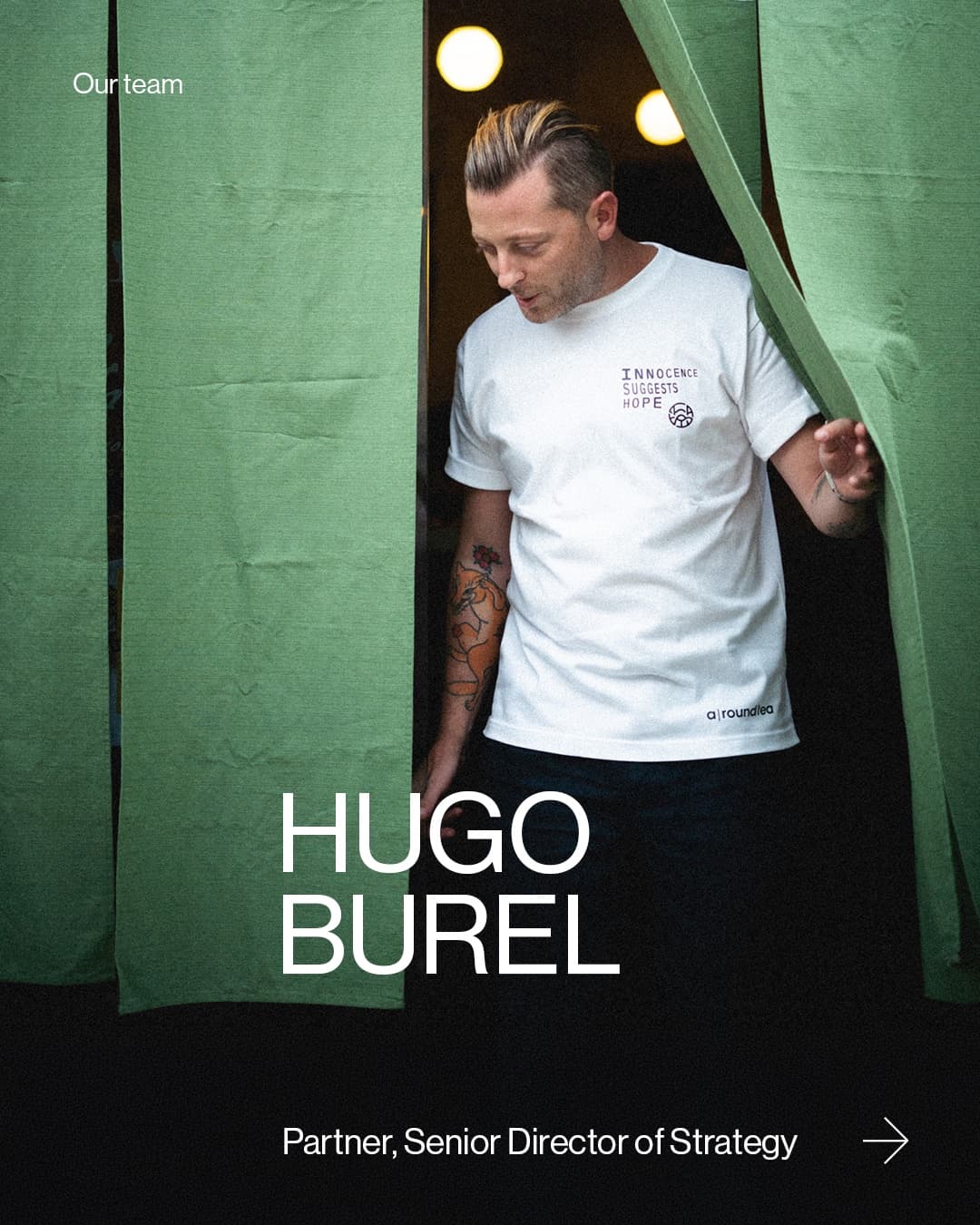
Hugo Burel
2026.09.25 · 5 min read
Communication is not the primary instrument of brand-building. Behaviour is.
The word brand begins with fire. From the Old Norse brandr, meaning to burn, it described the act of pressing a mark into livestock, pottery, clay. A permanent claim of origin. This is mine. This came from here. For most of human history, that was enough.
But meaning, like markets, expands. By the industrial era, a brand was a guarantee: the name on the tin that promised every unit inside was the same as the last. Then advertising made it a personality. Positioning theory made it a perception. The internet made it a reputation. Cultural theorists made it a myth. Each generation didn't replace the previous definition so much as add a layer, and with each layer the brand moved further from the physical world and deeper into the mind.
The brand has always been migrating inward: from the product to the promise, from the feeling to the story people tell themselves about who they are when they use it. Which raises the question: if a brand lives in the mind, what puts it there and keeps it there?
Before there were brands, there were people. And people, long before they built markets or cities or institutions, built relationships. They gathered, exchanged, debated and shared. Not because it was useful, though it was, but because it is what we are. According to Rutger Bregman, cooperation and social exchange are not refinements of human nature, they are human nature. We are, at the most fundamental level, creatures of dialogue. Wired not for competition but for connection, not for monologue but for exchange. Aristotle called it simply: man is a social animal. He meant it as a definition, not a preference.
This is not a marketing insight but an anthropological fact, and it has consequences for anything that wants to exist meaningfully in human life.
A brand does not arrive in the world fully formed. It emerges from people: from the beliefs, obsessions, contradictions, and convictions of the humans who built it. The brand carries the imprint of that original human conviction even as it grows beyond any single person's control. It is, in this sense, a form of authorship: something made in the image of whoever made it and then released into the world to be read by others. Like any authored work, it can be misread, extended, argued with. What it cannot be is neutral. A point of view was always there at the origin, whether the brand acknowledges it or not.
A brand that speaks but does not listen is not participating in human culture. It is interrupting it. It arrives with a message, deposits it and leaves, indifferent to what the room was already saying, indifferent to whether anyone wanted to hear it. It treats the people it depends on not as participants in a conversation but as an audience for a performance. And audiences, given the choice, can leave.
What people respond to, what they have always responded to, is being met. The sense that something on the other side of the exchange is genuinely present, genuinely listening, genuinely changed by the interaction. A brand that never evolves, never absorbs, never seems to be in actual dialogue with the culture it inhabits is not somewhere you return to for anything beyond the transaction.
A brand is a living entity that exists in relation to the world around it. It is constituted through its interactions with culture, society, and environment. It exists primarily in the exchange: in what it does, what it builds, what it stands behind, and how the world receives it. It can be shaped, invested in, expressed, but it is ultimately held by the people and communities it has touched. A shared story that a company proposes and culture either accepts, rejects or ignores.
Which means communication is not the primary instrument of brand-building. Behaviour is. What you contribute to the culture you draw from.
A brand without belief is a surface: responsive, adaptive and empty. And a brand so rigidly defined it can no longer engage with the world on the world's terms has confused identity with a curtain hiding what it is behind.
The analogy is human. Each of us carries a core that is not fixed in the sense of being frozen but fixed in the sense of being real. The strongest brands hold their convictions firmly enough to mean something, and loosely enough to be tested by the world.
There is an honest tension at the heart of every brand. It exists, in part, to sell. To generate revenue, return value to its owners, sustain the enterprise behind it. That is not a flaw. It is simply the condition under which brands operate in the world.
But somewhere along the way, many brands stopped there. They optimised so completely for extraction (for the conversion, the transaction, the margin) that they forgot the other half of the exchange. They took from culture, from community, from the attention and trust of real people, and gave back nothing but product.
This is not only a strategic failure. It is a social one. The anthropologist Marcel Mauss observed that in every human society, exchange is never purely economic; it is the mechanism through which relationships are formed and communities held together. To give is to initiate a bond. To take without returning is not a transaction. It is a refusal of the relationship. And culture, like any living system, eventually withdraws from those who only extract from it.
Products are bought and sold. Brands are something else. They are participants in the ongoing conversation that human societies have with themselves about what matters, what is beautiful, what is worth caring about. Which means building a brand is not, at its core, a commercial act. It is a social one. The act of putting a set of human beliefs into the world and trusting that the world will find them worth engaging with.
The brands that last are the ones that deserve to, because they brought something genuinely human to the world, and the world kept it.
Citation
- Rutger Bregman, Humankind: A Hopeful History (2019)
- Aristotle, Politics
- Marcel Mauss, The Gift (Essai sur le don, 1925)